
OUR CLUB POLICIES
-
At Glenunga, we aim to teach football skills and the value of teamwork in a fun environment for all. The following committee-approved principles, policies and Code of Conduct help guide this purpose. They complement the club’s constitution and provide generic and specific advice on matters which may ordinarily arise during the course of a season.
Glenunga Principles
Community football is crucial for building social connections, improving physical and mental health, fostering life skills, acting as a social hub that promotes inclusion, belonging, and community pride beyond just the game itself.
Non-Premiership Grades
Auskick, Under 7 to Under 10
The emphasis is on participation, skill and social development. There is ‘NO SCORING’ at these age levels. Our aim is to build a love of the game, facilitate new friendship groups (players and parents), develop base football skills and an interest to return each year. Accordingly, we have adopted the following rules:
In the first year at the club we will attempt to put the child with some players they know
We will create teams with children from a mixture of schools to expand the player’s social group
Aim to create teams that are relatively even in capability as best determined by past understanding of player capability
Coaches will rotate players through each zone throughout the season so they get to experience each zone
Coaches will rotate players on and off the oval throughout the game. Where we don’t have a full interchange bench each quarter, playing time will be managed to provide equal game time over a three-week period
Under 11
Whilst still viewed as non-premiership, scoring will be introduced at this age group. Glenunga’s approach will not change as the focus will still be on participation, skill and social development. Our aim is to build a love of the game, facilitate new friendship groups (players and parents), develop base football skills and an interest to return each year. Whilst no formal grading is conducted it is essential that we structure teams to ensure that each team is relatively balanced. Accordingly, we have adopted the following rules:
Ensure we field relatively balanced teams based on player and team structure.
There will be player movement between teams compared to prior seasons due to the number of teams fielded.
This creates the opportunity for players/parent to meet new families within age group.
We will aim to have more players in the squad than can play each week. This is because over the course of the year every team is hit with sickness, injury, players unavailable due to holidays or other reasons.
The expectation is that over the course of the season, every player has the opportunity to play the same number of games as every other player in the team. There is to be no favouritism within teams.
Premiership Grades
Under 12 to Under 14
We will continue to develop football skills and game sense, along with the ability to be a great teammate and continue to love the game and return each year. It is through this period where we support those that exhibit high levels of talent early on through nomination in development squads and equally support those players that require some further support from our program to help maximise their potential. The rules we have adopted are:
Our aim is to allocate teams to a Division in which they will be competitive, as well as challenged.
If we have two teams, we will have graded teams (Refer to grading process)
Where we have more than two teams, we will have one team allocated to a high division and the other teams will be split evenly and equally as best as the selection panel can determine.
We will aim to have more players in the squad than can play each week. This is because over the course of the year every team is hit with sickness, injury, players unavailable due to holidays or other reasons.
The expectation is that over the course of the season, every player has the opportunity to play the same number of games as every other player in the team. There is to be no favouritism within teams.
Under 15.5 to Under 18
The focus through these age groups is about preparing the players for senior football, whereby the coaching approach and expectations will increase, noting we still focus on skills and game sense at a more sophisticated level, as well as getting the players to be more accountable for their own commitment to the club, team mates and themselves. We will invest in other non-football programs that assist players through this period such as alcohol and drug awareness through sanctioned association programs.
During these ages, some players will end up focussing more on elite development programs through the SANFL teams or high school system. We will support them in this, as well as continue to invest in those players whose immediate path is through to the Glenunga Football Club Senior program. The rules we will follow are:
Our aim is to allocate teams to a Division in which they will be competitive, as well as challenged.
Coaches will provide the opportunity to play in a range of positions over the course of the season.
We will aim to have more players in the squad than can play each week. This is because over the course of the year every team is hit with sickness, injury, player unavailability.
The expectation is that over the course of the season, every player has the opportunity to play the same number of games as every other player in the team. There is to be no favouritism within teams.
Glenunga Policies
Junior pre-season training
Unless pre-approval is provided by the Glenunga Junior Director, junior pre-season must not commence prior to the new year. With competing summer sports and general availability, it is Glenunga’s preference to provide an opportunity for players and families alike to have a break from club football commitments.
Should coaches or parents organise pre-season training, all age group players from the previous season must be invited. Certain teams, or select players, are not to train individually under the guise of Glenunga pre-season training. Players are to train together as a squad.
While pre-season training is encouraged to support skill development, attendance will not be considered in player grading for the upcoming season. Participation in pre-season training also does not guarantee that players who train together will be selected in the same team/s during the regular season.
Junior coaching selection
We recognise that the coaching staff play a critical role not only in the development of juniors but also their enjoyment and ongoing participation in the game. The selection and appointment of coaches is critical to the success and growth of the club.
At the conclusion of each season, the Glenunga committee will seek expressions of interest for junior coaches for the following year. The Junior Coaching Committee will review all applications and endorse coaches, where possible, before the end of the year. In the new year, endorsed coaches will then be allocated to specific teams. For premiership grades with sufficient players for multiple teams, coach appointments will be finalised once the team selection process has been completed.
Team Allocation
Non-premiership age groups
In the younger years at Glenunga, the allocation of players to teams is important to create the opportunity for both skill and social development. Consistent parent feedback is that the focus should be on fun and enjoyment.
We endeavour to:
Provide teams where we have suitable coaches and team volunteer support.
There is a mix of schools represented in the team to expand the players’ social group.
That in each age group, players are as even in capability that can be determined by past understanding of player capability.
The club recognises the approach to allocating players to a team is an important part of player development process and an important determinant of how the player and their families enjoy their football experience.
Premiership age groups
Grading will occur prior to the season for premiership age groups. As defined by the SANFL, this is from Under 12 to Under 18. Player allocation to teams will balance the best interests of the club and the player. In making these allocations, consideration will be made of:
Providing every player the opportunity to improve and develop
Ensuring every player is able to participate at the level that matches their stage of development and provides them the opportunity to reach their potential over time
Performance and attributes displayed by the player during pre-season trials
Note – attendance alone at a general pre-season training does not guarantee selection in a certain team for the upcoming season.
If a player is unable to attend pre-season training or trials, this should be communicated to the team coaches in advance where possible. Where multiple teams exist within an age group, a player’s unavailability alone will not necessarily exclude them from consideration for a particular team. In such cases, previous performance may be one of several factors considered.
Following the grading and team allocation process, coaches are to provide parent information if requested on their choices. This feedback must be provided prior to the season starting.
Grading Process
In accordance with SANFL Premiership divisions, the formal grading of players is required from all clubs that field multiple teams within each age group. Glenunga FC place a strong emphasis on the grading process to ensure teams are formed based on player welfare, ability and fairness.
All coaches are expected to thoroughly assess each player using the established Player Assessment Framework during the grading process. This assessment will determine which team each player is best suited to, with the aim of placing individuals in a team that accurately reflects their football ability. To ensure independence and objectivity, a member of the coach committee will assist in the grading process.
Player Assessment Framework
To support coaches during the grading process, the coach committee has established a player assessment framework. The framework is based on a set of criteria, that is to be used when assessing each player based on Fundamental Proficiency, Game Awareness and Character.
This approach is to ensure players are allocated objectively to the appropriate team that is appropriate for their level of football skill and ability. Coaches can use this to assess players across the pre-season, and during trial games, to assess their overall ability. The final rankings can be used as the basis of player allocation to teams.
The framework is to be used for the following.
Player and parent communication
Individual Development plans
Restricted Playing List (RPL) nominations
SANFL Talent pathway nominations
Playing out of Age Group
Glenunga acknowledges that there are circumstances where players’ age and school year level may differ. In supporting the players to be able to play with their friendship groups the club will endeavour to accommodate these formal requests, more so in the younger age groups (u7-u10) given the player numbers that these age groups tend to have and player skill and physical size levels aren’t a safety issue. Requests get more challenging as squad sizes increase and team numbers reduce.
All requests will be processed once we finalise age group numbers and registrations have closed.
Age group policy
1. SANFL directive is that their preference is that all players play within their respective birthdate age groups.
2. Registered players that are of the correct birth year will take priority.
3. Prior years play up / play down approvals doesn’t mean approval the following season.
Process for play up/down requests will be based on:
1. Does the age group that the player has requested have spots available?
2. Will there be a material impact on the age group they are leaving?
3. The player’s size and football ability
4. Glenunga FC support
5. SANFL approval (based on certain criteria)
Team Captain Selections
The Glenunga Football Club is committed to promoting and nurturing to develop future leaders.
Non- Premiership
This is applicable for Under 7 to Under 11. Captains are to be rotated weekly based on players’ attitude and alignment with RAMS values (as below) and communicated as to why they have been selected. If we have two captains on certain weeks to enable rotation, then this can be permitted.
Premiership
This will affect age groups from Under 12 to Under 18.
Each team within each age group can select one captain and up to two vice captains.
Team captain or the vice-captains do not necessarily need to be the best players. This is evident in the AFL where most clubs do not have their best player as their captain. They are selected on their leadership qualities and their ability to influence others.
Match rotations
Non-premiership and premiership grades
Players must at minimum play three quarters of each match. It is the responsibility of team coaches to ensure this is adhered to.
Finals, including Grand Finals
All players selected to play in a finals match, including grand finals, must at least play one quarter each. It is the responsibility of team coaches to ensure this is adhered to.
Selection policy for teams with more players in a squad than can play each week
In the Premiership point age groups, we will aim to have more players in the squad than can play each week. This is because over the course of the year every team is hit with sickness, injury, players unavailable due to holidays or SANFL obligations.
The expectation is that over the course of the season, every player has the opportunity to play the same number of games as every other player in the team. There is to be no favouritism within teams. If players are unavailable for a game it is to be counted as a rostered week off.
Coaches and Team Managers are expected to manage and maintain accurate records of the number of games that the players play throughout the year to meet the requirements of this policy.
Selection policy for finals for Premiership point grades
Over the course of the year, the SANFL imposes minimum game qualification for finals in each grade. Coaches and Team Managers are to work with Age Group Coordinators to ensure that we have qualified a suitable number of players for each Premiership point grade team prior to finals to enable them to be competitive.
If a squad size is larger than the number of players allowed by the association to play in any given final, some players will need to be rostered off. The decision to roster players off in finals will be made by the Coach and Team Manager, in consultation with the Age Group Coordinators.
We will endeavour to provide as many players as possible the opportunity to experience finals football. Where the team plays one final, the maximum number of players will be selected. Where the team plays three or more finals, all available players must play at least one final.
The principles to determine who is rostered off will include injury, training attendance, attitude, ability to commit to the club and be available for games throughout the year, and ability to conduct themselves in accordance with our values.
Concussion Policy
A concussion is a type of traumatic brain injury caused by a blow to the head, face, neck, or body that results in the head moving rapidly. Concussion symptoms may appear immediately or develop over time.
Any head knock must be treated as a possible concussion.Any junior or senior player who sustains a head knock during training or a match should be considered to have a possible concussion. Coaches, team managers, umpires, players and parents are encouraged to be alert to signs and symptoms.
If a player shows any signs or symptoms of concussion, they must be removed from play immediately. The player must not return to the game or training on the same day, regardless of symptom improvement. When in doubt, sit them out.
Each Team Manager has the responsibility to report all head knocks to the club by midnight Sunday. Glenunga players with a suspected concussion are strongly recommended to undergo an initial medical assessment 3–4 days after the incident. Assessment should be conducted by a:
Trained Physiotherapist, or
Sports Doctor / Medical Practitioner
If a concussion is diagnosed, the player must enter the club’s concussion management protocol. Before returning to full contact training or match play, the following minimum conditions must be met:
At least 21 dayshave passed since the concussion incident; and
At least 14 days symptom-free at rest
The return to activity should be gradual and medically supervised. Any return of symptoms requires the player to stop activity and return to the previous symptom-free stage. The club requires written medical clearance from a qualified medical practitioner before a player may return to full contact training and participate in match play. No exceptions will be made.
Players, parents, coaches and officials share responsibility for following this policy. Failure to comply with this policy may result in the player being deemed ineligible to play.
Any player with two or more concussions in the same season, or three concussions within 12 months, should be managed more conservatively, with a slow return to play protocol and reviewed by a trained physiotherapist or sports doctor with expertise in the management of concussion.
Working with Children Clearance
All club officials and volunteers are required to complete a Working with Children Check. If a check has not been obtained before commencing a volunteer role, an application must be submitted before starting any duties with the Club. No person will be considered for a coaching or volunteer roles if a Working with Children Clearance cannot be obtained.
Anti-harassment, Discrimination and Bullying
The Glenunga Football Club opposes all forms of harassment, discrimination and bullying. This includes treating or proposing to treat someone less favourably because of a particular characteristic; imposing or intending to impose an unreasonable requirement, condition or practice which has an unequal or disproportionate effect on people with a particular characteristic; or any behaviour that is offensive, abusive, belittling, intimidating or threatening – whether this is face-to-face, indirectly or via communication technologies such as mobile phone and computers.
Some forms of harassment, discrimination and bullying are against the law and are based on particular characteristics such as age, disability, gender, sexual orientation, pregnancy, political or religious beliefs, race, and marital status.
Our club takes all claims of harassment, discrimination, bullying and cyber bullying seriously. We encourage anyone who believes they have been harassed, discriminated against or bullied to raise the issue with the club. Glenunga will promote communication and cooperation to prevent and resolve conflicts, fostering a positive community where everyone can enjoy and participate in sport safely.
Media Policy
The Glenunga Football Club represents more than 750 players, hundreds of volunteers and thousands of families. It is therefore imperative that it is represented fairly and accurately in the wider public.
Unless pre-authorised by the club President, football club members cannot speak on behalf of Glenunga to the media, or be involved in any media engagements, unless approval is received from the club President. This includes but is not limited to players, parents, sponsors or coaches. This covers both proactive and reactive, as well as direct and indirect media opportunities.
Should any football club members receive a media enquiry or opportunity, it must be directed in the first instance to the club President.
Code of Conduct
The Glenunga Football Club has established clear behavioural guidelines for all junior and senior players, as well as parents, caregivers and supporters. The Code of Conduct describes how we put our commitment to be a welcoming and inclusive club into practice and prescribes mandatory standards.
The Code is applicable to every stakeholder which may interest with the club. This includes but is not limited to parents, players, volunteers, officials and sponsors. While such persons are not expected to know the Code in full, they are required to comply with its requirements at all times.
CODE OF CONDUCT – PARENTS
Remember that children participate in sport for their enjoyment, not yours.
Encourage children to participate, do not force them.
Focus on the child’s efforts and self esteem rather than winning or losing.
Encourage children to always participate according to the rules.
Never ridicule or yell at a child for making a mistake or the team losing a match.
Respect the umpire’s decisions and teach children to do likewise. Without them there would not be a competition.
Remember that children learn best by example. Applaud the efforts of all players in both teams.
Support all efforts to remove verbal and physical abuse from sporting activities.
Show appreciation of volunteer coaches, officials, administrators and umpires and teach your children to do the same.
Respect the rights, dignity and worth of all participants regardless of their gender, ability, cultural background or religion.
Act in a way that positively represents the Glenunga Football Club and our wider community.
CODE OF CONDUCT – JUNIORS
Play for your own enjoyment and benefit and not just to please parents/caregivers and coaches.
Play by the rules.
Respect the umpire’s decision. Without them there would not be a competition.
Never argue with an official. If you have a problem, talk to your Coach or Team Manager. Co-operate with your coach, team mates and opponents. Without them there would be no competition.
Be a good sport. Applaud all good plays whether they are by your team or the opposition. Work equally hard for yourself and your team. Your team’s performance will benefit and so will you.
Respect the rights, dignity and worth of all participants regardless of their gender, ability, cultural background or religion.
Control your temper. Verbal abuse of officials, sledging other players or deliberately distracting or provoking an opponent is not acceptable or permitted in any sport.
Treat all players as you would like to be treated. Do not interfere with, bully or take unfair advantage of another player.
CODE OF CONDUCT – SENIORS
Play by and adhere to the rules, both on and off the field.
Adhere to team and club values added to player conduct.
Present yourself for training, matches and club functions in a fit state.
Never argue with umpires. They will never change a decision and your actions will penalise the team.
Do not use foul language.
Be a good sport. Applaud all good plays whether they are by your team or the opposition. Respect your team mates and coaches. Encourage team mates at all times, never "bag" them.
Treat all players, officials and spectators equally irrespective of race, colour or religion.
Attend matches properly dressed in team tops and other approved club uniform.
Endeavour to attend after match presentations and club functions.
Assist with match day tasks if requested by the coach and or officials.
Ensure you follow the directions of club training staff in treatment of injuries and report any injuries to training staff at earliest opportunities. This includes concussions.
CODE OF CONDUCT – COACHES
I will respect the rights, dignity and worth of all individuals within the context of my involvement in Australian Football, including refraining from any discriminatory practices on the basis of race, religion, gender, ethnic background or special ability/disability.
I will abide by and teach the AFL Laws of the Game and the rules of my club and league/association.I will be reasonable in the demands I make on the time commitments of the players in my care, having due consideration for their health and well-being.
I will be supportive at all times and I will refrain from any form of personal or physical abuse or unnecessary physical contact with the players in my care.
I will have due consideration for the varying maturity and ability levels of my players when designing practice schedules, practice activities and involvement in competition.
Where I am responsible for players in the 4-18-year-old age group, I will strive to ensure that all players gain equal playing time. I will avoid overplaying certain players, aiming to maximise participation, learning and enjoyment for all players regardless of ability.
I will not display favouritism or bias towards or against certain players, parents or families.
In recognising the significance of injury and sickness, I will seek and follow the physician’s advice concerning the return of injured or ill players to training, particularly for concussions.
I will endeavour to keep informed regarding sound principles of coaching and skill development, and of factors relating to the welfare of my players.
I will at all times display and teach appropriate sporting behaviour, ensuring that players understand and practise fair play.
I will display and foster respect for umpires, opponents, coaches, administrators, other officials, parents and spectators.
I will ensure that players are involved in a positive environment where skill learning and development are priorities and not overshadowed by a desire to win.
I reject the use of performance-enhancing substances in sport and will abide by the guidelines set forth in the AFL Anti-Doping and Illicit Drugs policies.
As a Glenunga Football Club coach, I acknowledge that my actions, both within and outside the Club, may reflect on the Club. I will conduct myself courteously and professionally at all times.
CODE OF CONDUCT – ADMINISTRATION/OFFICIALS
Ensure equal participation for all: provide equal opportunities for all regardless of ability, physicality, sex, age, disability or ethnic origin.
Suitability of program: ensure that the rules, equipment, length of games and training schedules take into consideration the age, ability and maturity level of the participants. Ensure adequate supervision: adequate supervision must be provided by qualified and competent coaches and officials capable of developing appropriate sports behaviour and skills.
Prioritise enjoyment: remember children participate for enjoyment. Play down the importance of rewards.
Promote adult education: develop improved standards of coaching and officiating with an emphasis on appropriate behaviour and skills.
Promote fair play: ensure parents, coaches, officials, sponsors, physicians and participants understand their responsibilities regarding fair play.
Modify to suit various levels: modify rules and regulations to match the skill level of participants and their needs.
Promote respect for opponents: condemn unsporting behaviour.
Maximise enjoyment: publicly encourage rule changes that will reinforce the principle of participating for fun and enjoyment.
Keep up to date: make a personal commitment to keep informed of the sound principles of administering recommended football programs for junior players.
As a Glenunga Football Club administrator/official, I acknowledge that my actions, both within and outside the Club, may reflect on the Club. I will conduct myself courteously and professionally at all times.
Please note the following:
Under no circumstances is an individual from our club permitted to complain in writing or verbally to any other club. If a complaint involves the conduct of another club, the Junior Football Director will arrange through the Committee to raise with the club.
Parents are not to contact SANFL directly. Where the Junior Football Director or Committee believes the matter warrants involvement of SANFL then a committee member will contact SANFL on the clubs and parents’ behalf. It is important that in raising and managing any complaint or grievance that the conduct of all parties is consistent with our Code of Conduct.
Breach of or failure to comply with the Code can result in disciplinary action being taken. As required, this can include a Disciplinary Review Committee being convened to investigate and address any alleged contraventions of the Code.
Disciplinary Review Process
The Glenunga Football Club is committed to upholding a safe, respectful and inclusive environment for all members. This disciplinary review process outlines the procedures to follow in the event of inappropriate conduct by players, parents, spectators, or club officials. The process can equally be applied for matters of general dispute between club members or wider complaints.
This process does not diminish the responsibilities of Age Coordinators and Team Managers. These positions continue to serve as the primary point of contact for all matters, including any incidents. Parents and caregivers are encouraged to continue raising issues with Age Coordinators and Team Managers as the initial step.
1. Reporting an Incident
A significant incident involving inappropriate conduct must be reported to both the Junior/Senior Director and Club President no later than 5pm on the Monday following an alleged incident.
Reports should include a summary of the alleged incident, names of those involved and names of any witnesses.
2. Preliminary Assessment
Upon receiving a report, the Junior/Senior Director and President will conduct a preliminary assessment to determine whether further investigation or disciplinary action is warranted.
If the matter is deemed significant or unresolved, a Disciplinary Review Committee will be convened.
3. Formation of the Disciplinary Review Committee
A committee will be formed no later than Thursday evening of the same week.
The committee can comprise of:
The Junior/Senior Director
The Junior Coaching Director (if junior-related)
The Club President; or
Player Welfare Officer
Committee members can delegate their role as required.
4. Gathering of Evidence
The Disciplinary Review Committee will gather relevant information, including:
Information from involved parties
Witness accounts
All parties involved, including the alleged wrongdoer and any witnesses, may be contacted for clarification or additional details.
Any written correspondence from the club must be polite and courteous in nature.
5. Meeting with the Alleged Offender
Once available evidence is compiled, the committee will offer the alleged wrongdoer the opportunity to discuss the incident – either in person or virtually – to respond to the allegations or provide their perspective.
It is strongly preferred to meet with individuals in person.
In cases where an individual acknowledges wrongdoing, this step may be waived.
An admission will be taken into account when determining the outcome and any ramification.
6. Determination and Outcomes
Based on the evidence and discussions, the committee will determine whether a breach of conduct has occurred and, if so, what disciplinary action is appropriate.
Possible outcomes may include:
Verbal or written warning
Temporary suspension from games, trainings, events, club duties or club facilities
Revocation of official club duties (e.g., coach, team manager)
Termination of club membership and permanent expulsion
The Disciplinary Review Committee may consult with the Coaching Committee to ensure consistency in the application of sanctions and can escalate serious matters to the General Committee for final approval.
7. Dispute Resolution and Broader Adjudication
The Disciplinary Review Committee is also authorised to adjudicate broader disputes where there is disagreement about appropriate actions or outcomes within the club.
8. Timelines
A final decision must be reached within 12 days of the incident submission.
All outcomes will be communicated in writing to the parties involved and include either a phone call or virtual meeting to relay the information.
9. Confidentiality
All matters under review will be handled confidentially, with respect for the privacy of everyone involved.
-
1. NAME
1.1. The name of the association is ‘Glenunga Football Club’ (hereinafter referred to as ‘the Club’).
1.2. The Club may nominate any teams as ‘Glenunga Rams.
2. OBJECTS
2.1. Promote and encourage Australian Rules Football for all ages.
2.2. Foster fellowship among members, persons and bodies who have contact with the Club from time to time.
2.3. Affiliate with such football leagues or associations as may be necessary to provide competition for members of the Club.
2.4. Liaise with associated affiliates, relevant local authorities and schools within the vicinity of the Club in relation to the promotion of Australian Rules Football.
2.5. Do all things, which the Management Committee may think necessary or desirable for promoting the recreation and convenience of its members and for the purposes of raising money for the benefit of the Club.
2.6. Own, purchase, take or lease or otherwise acquire land and buildings or other property for the purposes of the Club.
2.7. Generally maintain and conduct a club for the accommodation, entertainment and comfort of members and their guests and to provide clubrooms and other conveniences and generally afford members and their guests all the usual privileges, advantages, conveniences and accommodation of a sporting and social club.
2.8. Borrow or raise money with or without giving security and particularly by the issue of or upon bonds, debentures (redeemable on dates to be determined by yearly ballot or otherwise at the discretion of the Club), bills of exchange, promissory notes or other obligations or securities of the Club or by mortgage or charge upon all or any part of the property of the Club.
2.9. Invest and deal with the money of the Club not immediately required upon such securities and in such manner as may from time to time be determined by the Management Committee.
2.10. Do all such other lawful things as are incidental or conducive to the attainment of the above objects.
3. CLUB COLOURS
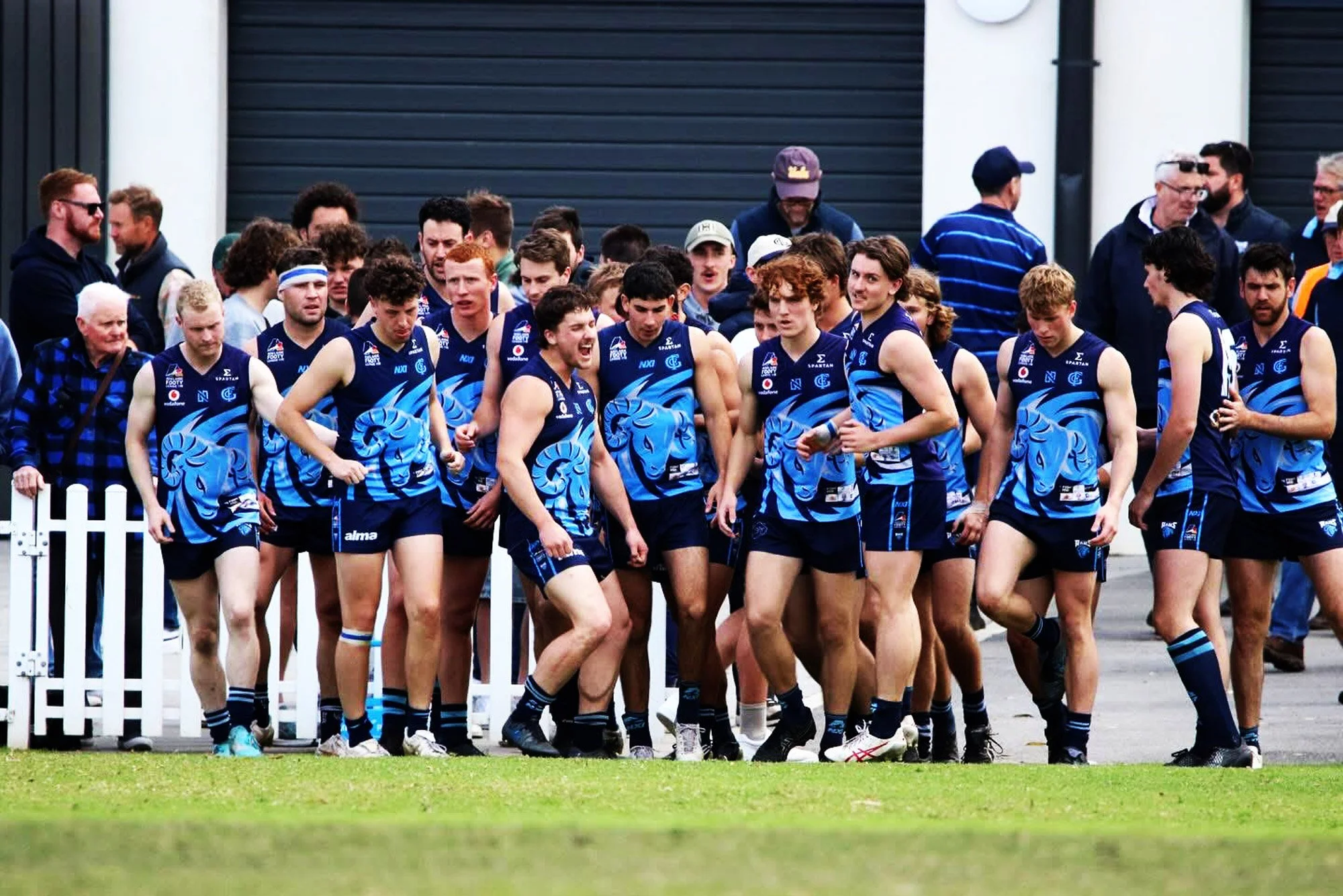
3.1. The predominant colours of the Club shall be dark blue and light blue.
3.2. Any change to the Club colours requires a majority supporting the change at a formal vote at an Annual General Meeting or Special General meeting
4. MEMBERSHIP
The Club shall have the following classes of members:-
4.1. Social Members who shall -
4.1.1. Be over the age of 18 years.
4.1.2. Have paid the annual subscription for a Social Member as determined by the Management Committee.
4.1.3. Are not entitled to vote at an Annual General Meeting or a Special General Meeting.
4.1.4. Be entitled to use the facilities of the Club subject to any by-laws, rules or regulations of the Club.
4.2. Player Members who shall -
4.2.1. Be over the age of 18 years.
4.2.2. Have paid the annual subscription for a Player Member as determined by the Management Committee.
4.2.3. Be entitled to vote at an Annual General Meeting or a Special General Meeting.
4.2.4. Be entitled to use the facilities of the Club subject to any by-laws, rules or regulations of the Club.
4.2.5. Be entitled to be chosen to play in any Club team.
4.3. Officials who shall -
4.3.1. Be over the age of 18 years.
4.3.2. Fulfil a role on the Management Committee as appointed at an Annual General Meeting or in accordance with this Constitution.
4.3.3. Be entitled to vote at an Annual General Meeting or a Special General Meeting.
4.3.4. Be entitled to use the facilities of the Club subject to any by-laws, rules or regulations of the Club.
4.4. Life Members who shall -
4.4.1. Be appointed by the Management Committee upon the recommendation of a sub-committee appointed for that purpose by the Management Committee.
4.4.2. The sub-committee shall consist of a member of the Management Committee and a minimum of 3 current Life Members of the Club.
4.4.3. Be chosen for any reason, including number of games played and outstanding service to the Club on the field, or meritorious and outstanding service to the Club in an off-field capacity.
4.4.4. Be entitled to vote at an Annual General Meeting or a Special General Meeting.
4.4.5. Be entitled to enjoy all the privileges and be subject to the obligations of a Social Member during his or her lifetime, save and except that he or she shall be exempt from the need to pay any annual or other subscription to the Club.
4.5. Junior Members who shall -
4.5.1. Be under the age of 18 years.
4.5.2. Have paid the annual subscription for a Junior Member as determined by the Management Committee.
4.5.3. Be able to nominate a parent or guardian to vote on the Junior Members behalf at the Annual General Meeting or at a Special Meeting.
4.5.4. Where there are more than two Junior Members in a family, the voting rights shall be limited to a maximum of two votes per family as Junior Members.
4.6. Honorary Members who shall -
4.6.1. Be appointed by the Management Committee.
4.6.2. Be appointed for a particular purpose, duration and assigned duties by the Management Committee.
4.6.3. Be entitled to vote at an Annual General Meeting or a Special General Meeting.
4.7. A financial member of the Club is a person who has paid all subscriptions and fees prior to the 30th June of that financial year.
4.8. A person who has had the opportunity to become a financial member by the 30th June of that year but who has not in fact become a financial member by that date can only become a Social, Player or Family Member by paying all due subscriptions plus a late fee as determined by the Management Committee. A late fee may be waived by the Management Committee.
4.9. Any member, whose membership fees are not in arrears, may resign their membership by giving 14 days’ notice in writing of their intention to do so.
4.10. Upon a member resigning in accordance with paragraph 4.9, the member shall have no claim upon the Club or any of its property.
4.11. Any member who in the opinion of the Management Committee has behaved in a manner injurious to the reputation or interests of the Club or is considered to have acted to the serious detriment of the Club or its property may be given written notice that the member is suspended with immediate effect from the precincts of the Club and or that it is intended to suspend or expel the member from the Club one month from the date of receipt of that notice.
4.11.1. A member who receives notice in accordance with this provision may lodge a notice of appeal in writing with the Secretary within one calendar month of receipt of the notice.
4.11.2. The Management Committee shall appoint a 3 person Appeals Committee independent of the Management Committee.
4.11.3. The Appeals Committee shall hear the appeal and report to the Management Committee on their recommendations within one calendar month of the receipt by the Secretary of the notice of appeal.
4.11.4. The Management Committee shall consider the recommendations of the Appeals Committee and determine the outcome of the appeal.
4.11.5. If no notice of appeal is received by the Secretary within one calendar month of any notice to expel being given to a member, such member's membership shall be terminated.
5. ANNUAL GENERAL MEETING
5.1. The Annual General Meeting of the Club shall be held within 3 calendar months after 30 September of each year.
5.2. Written notice of the Annual General Meeting together with the agenda shall be forwarded to all members of the Club at least 14 days prior to the date fixed for the meeting.
5.3. The business to be conducted at the Annual General Meeting shall be -
5.3.1. Apologies
5.3.2. Confirmation of the minutes of the previous Annual General Meeting
5.3.3. Matters arising from the minutes
5.3.4. Correspondence
5.3.5. Receipt of the annual report
5.3.6. Receipt of the audited accounts of the Club
5.3.7. Election of office bearers and committee members
5.3.8. Announcement of Life Members
5.3.9. Football Grades Reports
5.3.10. General Business
5.4 The current Chairperson shall chair the meeting; in his or her absence the meeting shall appoint a chairperson.
5.5 Player Members, Officials, Life Members, nominated Parent or Guardian of a Junior Member and Honorary Members may vote on any matter.
5.6 Voting shall be by a show of hands, unless the meeting shall resolve to conduct a secret ballot.
5.7 A quorum shall consist of 15 voting members.
5.8 A motion, save for a motion amending the constitution, shall be passed by a simple majority.
6. SPECIAL GENERAL MEETING
6.1. May be convened by the Management Committee or shall be convened on the written requisition signed by at least 10 voting members. A requisition by members of the Club shall contain the motion for which the meeting is to be convened and shall be delivered to the Secretary.
6.2. The meeting shall be held within 21 days 'of the receipt of the requisition by the Secretary.
6.3. The Secretary shall forward written notice, which includes email notice, of the meeting and the motion to be considered at the meeting to all members at least 7 days prior to the date fixed for the meeting.
6.4. The Chairperson, or in his or her absence a person appointed by him or her, shall chair the meeting.
6.5. A quorum shall consist of 15 voting members.
6.6. Player Members, Officials, Life Members, nominated Parent or Guardian of a Junior Member and Honorary Members may vote on any matter.
6.7. Save for a motion to amend the constitution, a motion shall be passed by a simple majority.
6.8. No business other than consideration of the motion of which notice has been given shall be conducted at the meeting.
7. THE EXECUTIVE
7.1. Shall consist of the Chairperson, Secretary, Treasurer, President, Senior Football Director and Junior Football Director elected in accordance with this constitution.
7.2. All Executive roles shall be appointed at the Annual General Meeting, on the terms described under Section 9 Roles and Responsibilities of Named Officers.
7.3. May meet as necessary to conduct the business of the Club between Management Committee meetings.
7.4. Any decision made by the Executive shall be submitted for consideration and, if appropriate, for ratification at the next meeting of the Management Committee after the decision is made.
8. THE MANAGEMENT COMMITTEE
8.1. Shall consist of the Executive and a minimum of 5 and a maximum of 15 other roles as the Committee deems required to operate the club.
8.2. All roles will be appointed at the first full sitting of the Committee after the Annual General Meeting or Special General Meeting.
8.3. One of the roles on the Management Committee will be the Players Representative. The Players Representative shall be voted on by the Senior Players prior to April of each year.
8.4. Shall organise and supervise the affairs of the Club, with authority inter alia -
8.4.1. To control the funds and finances of the Club.
8.4.2. To convene meetings of the Club.
8.4.3. To make by-laws for the general management and conduct of the Club.
8.4.4. To appoint ad hoc sub-committees for such purposes as they consider appropriate for the conduct of the Club.
8.5. Shall meet at least once in every month on a date and at a time to be determined and at such other times as it or the Chairperson shall direct.
8.6. The Chairperson shall chair all meetings at which he or she is present. In his or her absence the meeting shall appoint a chairperson from its members.
8.7. A quorum shall be half plus one of the number of current members of the committee.
8.8. A member of the Management Committee will hold office for one or two years, but on the expiration of his or her term of office shall be eligible for re-election.
8.9. Half of the sitting members of the Management Committee shall retire each year but shall be eligible for re-election.
8.10. A member of the Management Committee or any other committee may retire from his or her position by giving one month's notice in writing to the Chairperson.
8.11. May fill any casual vacancy which may occur in the Management Committee or any other committee. Any person so appointed shall hold office until the next Annual General Meeting.
8.12. Any member of the Management Committee or any other committee may be removed from office by a resolution at a Special General Meeting.
8.13. The Management Committee may continue to operate notwithstanding the fact that a vacancy in the Management Committee has not been filled.
9. ROLES AND RESPONSIBILITIES OF NAMED OFFICERS
9.1. CHAIRPERSON
9.1.1. Shall hold office for two years, but on the expiration of his or her term of office shall be eligible for re-election.
9.1.2. Shall preside at all meetings of the Club or Management Committee at which he or she is present.
9.1.3. Shall supervise the activities of the Management Committee
9.1.4. Shall oversee all duties performed by officers of the Club.
9.1.5. Shall act as spokesperson for the Club.
9.1.6. Shall liaise with people in similar positions with other associated clubs.
9.1.7. Shall be ex-officio a member of all committees of the Club.
9.1.8. Shall represent the Glenunga Football Club as a member of the committee of the Glenunga Sports and Social Club, or nominate a representative.
9.2. SECRETARY
9.2.1. Shall hold office for two years, but on the expiration of his or her term of office shall be eligible for re-election.
9.2.2. Shall prepare agendas for all meetings of the Club and the Management Committee in consultation with the Chairperson.
9.2.3. Shall conduct the correspondence of the Club.
9.2.4. Shall convene all meetings of the Club and the Management Committee in accordance with this constitution.
9.2.5. Shall be responsible for the keeping of minutes at all meetings of the Club or the Management Committee and for submitting them for confirmation at the next meeting of the Club or the Management Committee.
9.2.6. Shall keep a list of members of the Club. The list shall be known as the Register of Members. It shall contain the name, address and class of membership of each current member of the Club. Honorary Members will not be recorded.
9.2.7. Shall be responsible for the preparation presentation of an Annual Report of the Club at the Annual General Meeting.
9.2.8. Shall be the Public Officer of the Club for the purposes of the Associations Incorporation Act.
9.2.9. Shall represent the Glenunga Football Club as a member of the committee of the Glenunga Sports and Social Club, or nominate a representative.
9.3. TREASURER
9.3.1. Shall hold office for two years, but on the expiration of his or her term of office shall be eligible for re-election.
9.3.2. Shall keep an accurate record of all receipts and payments of the funds of the Club.
9.3.3. Shall arrange for the books of the Club to be audited once a year or at such other times as the Management Committee may direct.
9.3.4. Shall prepare and submit to the Annual General meeting the accounts, a report of the auditor of the past year and a budget for the ensuing year
9.3.5. Shall provide to each monthly Management Committee meeting a report of the current financial position of the Club.
9.3.6. Shall be responsible for organising the collection of all membership fees and any other monies due to the Club.
9.4. PRESIDENT
9.4.1. Shall hold office for two years, but on the expiration of his or her term of office shall be eligible for re-election.
9.4.2. Shall be responsible for leadership and coordination of the day to day on and off field activities of the Club.
9.4.3. Shall support the Senior Football Director and Junior Football Director undertake their roles.
9.4.4. May delegate to any member of the Club any function or part of the functions of the President duties.
9.4.5. Shall preside at all meetings of any Committee appointed to organise on or off field activities.
9.4.6. Shall be responsible for reporting to the Management Committee in relation to the operations of the Club at each monthly Management Committee Meeting.
9.4.7. Shall be a member of the Executive.
9.5. SENIOR FOOTBALL DIRECTOR
9.5.1. Shall hold office for two years, but on the expiration of his or her term of office shall be eligible for re-election.
9.5.2. Shall control and coordinate the on field organisation of the Club's senior teams in cooperation with the Management Committee and the coaches of those teams.
9.5.3. May delegate to any member of the Club any function or part of the functions of the Senior Football Director duties.
9.5.4. Shall preside at all meetings of any Committee appointed to organise senior teams including team selection, recruitment, coach and player performance.
9.5.5. Shall be responsible for reporting to the Management Committee in relation to the operations of the senior teams and activities relating to them at each monthly Management Committee Meeting.
9.5.6. Shall be the Senior Association contact and representative for the Club.
9.5.7. Shall be a member of the Executive.
9.6. JUNIOR FOOTBALL DIRECTOR
9.6.1. Shall hold office for two years, but on the expiration of his or her term of office shall be eligible for re-election.
9.6.2. Shall control and coordinate the on field organisation of the Club's junior teams in cooperation with the Management Committee, any Coordinators or Committee appointed to administer junior football and the coaches of the junior teams.
9.6.3. May delegate to any member of the Club any function or part thereof of the Junior Football Director duties.
9.6.4. Shall preside at all meetings of any Committee appointed to organise junior teams.
9.6.5. Shall be the Junior Association contact and representative for the Club.
9.6.6. Shall be a member of the Executive.
10. FINANCE
10.1. All working moneys shall be deposited with a bank to be determined by the Management Committee of the current year.
10.2. All cheques, promissory notes, bills of exchange and all documents, save as provided by the sealing clause, shall be signed by any two of the Chairperson, Treasurer, Secretary or other role as determined by the Committee.
10.3. The Management Committee may arrange for designated Members of the Club to be issued with credit cards for limited amounts to be used for Club purposes.
10.4. The Club's books of account shall be audited prior to the Annual General Meeting by a person who is not a member of the Club.
10.5. Any profits arising from the activities of the Club shall not be divided amongst the members but shall be used for the objects of the Club.
10.6. The financial year for the purpose of membership shall be from the 1st April of one year to the 31st March of the following year.
10.7. The financial year for other purposes shall be from the 1st October of one year to the 30th September of the following year.
11. INDEMNITY
Every officer of the Club, every member of the Management Committee and every member of any committee of the Club shall be entitled to be indemnified by the Club in respect of liability which such officer or member may incur in carrying out such officer's or member's duties.
12. INTERPRETATION AND AMENDMENT OF THE CONSTITUTION
12.1. This constitution may only be added to, altered or amended at an Annual General Meeting or a Special General Meeting convened in accordance with this constitution.
12.2. The notice convening the meeting shall set out details of the proposed amendments.
12.3. The notice convening the meeting shall be forwarded to the members at least 14 days prior to the date fixed for the meeting.
12.4. A motion to amend this constitution must be carried by a majority of two thirds of voting members present and voting at the meeting.
12.5. In the event of any doubt or uncertainty arising as to the interpretation or application of the provisions of this constitution or any rules, by-laws or regulations made under it, the Management Committee shall have power to make a ruling which shall be binding on the members.
12.6. In the event of a situation arising for which provision is not made in this constitution or any rules, by-laws or regulations made under it, the Management Committee may determine what action if any is to be taken and its decision shall be binding on the members.
12.7. If the Management Committee is required to make a determination under (12.6), it shall propose an amendment to the constitution to remedy the anomaly at the next Annual General Meeting.
13. WINDING UP
13.1. The Club shall not be dissolved unless all liabilities have been discharged and a motion has been passed by a three quarter majority vote of the members present at a Special General Meeting convened for the purpose.
13.2. Should the Club resolve to wind up, this must be effected by a special resolution as follows:
13.2.1. the resolution must be passed at a duly convened meeting of members of the association
13.2.2. at least 21 days written notice to propose the resolution as a special resolution has been given to all members of the association, and
13.2.3. it is passed at a meeting referred to in this paragraph by a majority of not less than three quarters of such members of the association as, being entitled to do so, vote in person, or where proxies are allowed, by proxy, at that meeting.
13.3. In the event of the Club being wound up, the funds which remain after such dissolution and the satisfaction of all debts and liabilities of the Club shall be paid and applied by the Club in accordance with its powers to any organisation which:
13.3.1. Has similar objectives at the Club, and;
13.3.2. Which has rules prohibiting the distribution of its assets and income to its members.